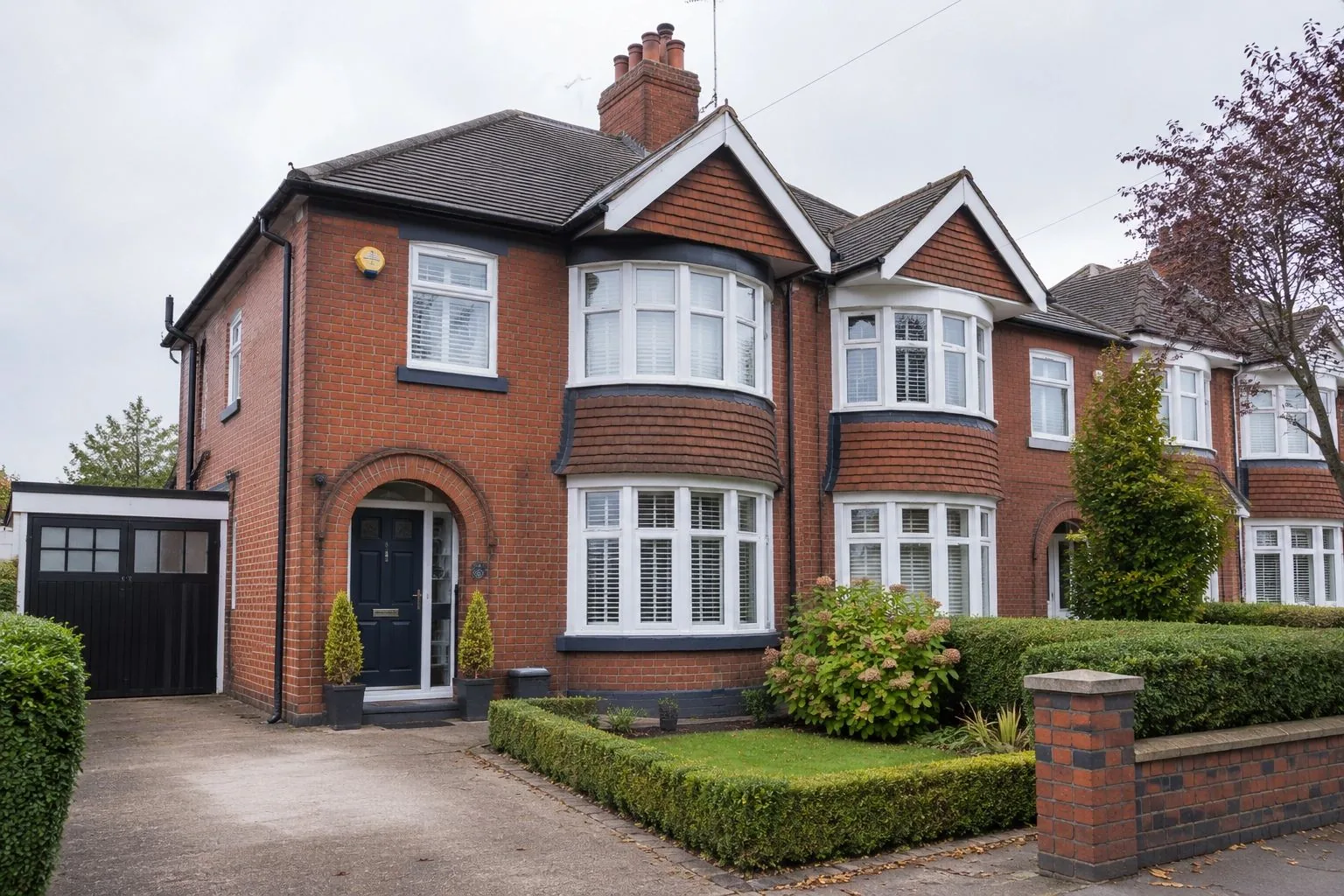
A damp patch at the base of a wall can cause immediate concern, particularly when buying an older home. The phrase “rising damp” is often used quickly, but low-level dampness can have several different causes. The central point is simple:
Moisture meters tell you where moisture or conductive material is present. They do not, by themselves, tell you why it is there.
In older properties across Lancashire and the wider North West, moisture should be assessed as part of the whole building. Wall construction, external ground levels, roof coverings, rainwater goods, ventilation, plumbing, finishes and previous repairs all matter. This article follows our related guides on reading cracks in your home and how a Level 3 Building Survey helps you decide whether to buy.
What Is Rising Damp?
Rising damp describes moisture moving upwards through porous masonry from the ground by capillary action. Where it occurs, moisture may be accompanied by salts, staining, deterioration to plaster and a pattern that is more pronounced at low level. However, genuine rising damp is only one possible explanation for internal dampness. Other common causes include:
- External ground levels that are too high and bridge the damp-proof course
- Oversailing brickwork forming a ledge where water can sit
- Defective gutters, downpipes, valleys or drains
- Leaking internal plumbing
- Defective chimney flashings or roof coverings
- Condensation caused by high humidity, poor ventilation or cold surfaces
- Impermeable coatings, cement render or unsuitable plaster trapping moisture
- Moisture remaining from an older problem that has left salts within the plaster
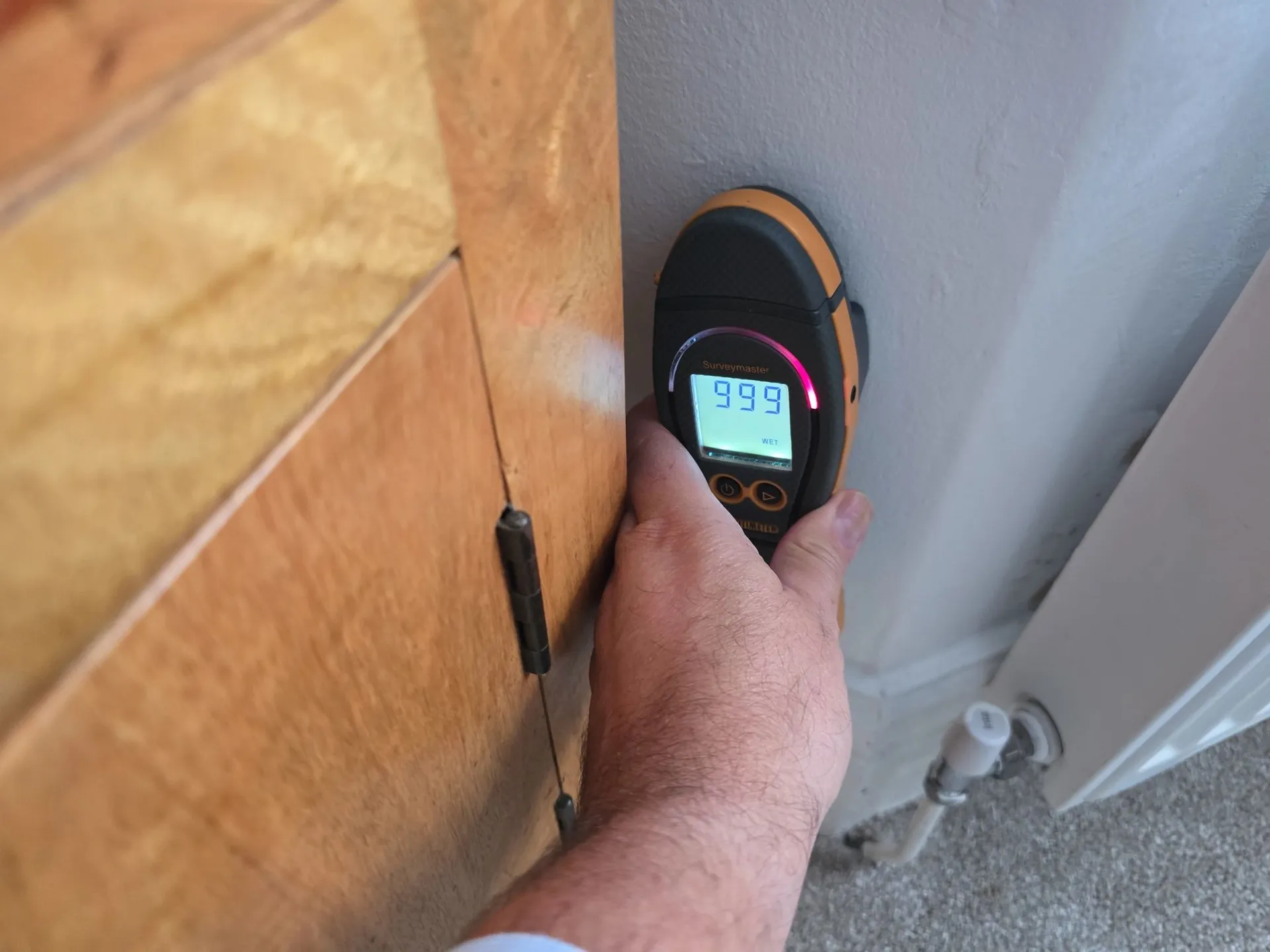
Electrical moisture meters can be affected by salts, metal fixings, foil-backed materials and certain plaster types. They are therefore useful investigative tools, but a high reading is not proof of rising damp. Historic England’s guidance on investigating moisture in traditional buildings and SPAB’s advice on what is commonly called rising damp both support a broader, evidence-based approach.
Why Does It Matter?
The diagnosis affects the repair. If the actual problem is a raised path, leaking downpipe or defective roof flashing, injecting a new damp-proof course may not resolve it. The moisture source remains, while the property may also acquire unnecessary plaster removal, chemical treatment or impermeable finishes. This is particularly important in pre-1919 and traditionally constructed buildings. Solid brick and stone walls often rely on compatible, vapour-permeable materials to manage moisture. Dense cement pointing, waterproof coatings and tanking can alter the way the wall dries. A previous owner may say:
“The damp-proofing has already been done, so the damp has been fixed.”
That statement should be treated as useful background information, not conclusive evidence. Ask for the specification, invoices, guarantees and details of the original diagnosis. Damp-proofing injection may be irrelevant if the actual cause is oversailing masonry, high ground levels, defective rainwater goods or condensation.
Carl’s View
A moisture meter gives you a starting point. It does not give you a diagnosis. The important question is not simply “how high was the reading?” but “what building defect explains the pattern?”
What Are the Warning Signs?
During inspections, the following observations may justify closer investigation:
- Damp staining or decorative deterioration concentrated at low level.
- Moisture readings that are significantly higher in one area than comparable walls elsewhere.
- Raised paving, soil, gravel or planting beds close to or above the damp-proof course.
- Air bricks that are blocked, buried or positioned below external ground level.
- Projecting or oversailing masonry that creates horizontal ledges.
- Defective gutters, downpipes, valleys or drainage channels close to damp internal walls.
- Peeling external coatings, open pointing or cracked render that may allow rainwater penetration.
- Damp staining below chimney breasts, roof valleys or defective flashings.
- Black mould or surface condensation behind furniture, in corners or around windows.
- Previous damp-proofing works without supporting paperwork or a clear explanation of the original cause.
The pattern is important. A fairly uniform low-level band may be consistent with moisture rising through the wall, but a localised patch beside a downpipe, chimney, external ledge or cold corner may point elsewhere.
From a Mason & Oak Survey
Localised dampness associated with oversailing brickwork and raised ground levels
During a Mason & Oak inspection, elevated moisture readings were recorded internally to sections of the living room and dining room. Externally, pronounced oversailing projections of the lower brickwork were noted to sections of the front and rear elevations. The projection was not uniform and was significantly more pronounced in certain areas. Raised external ground levels were also present.
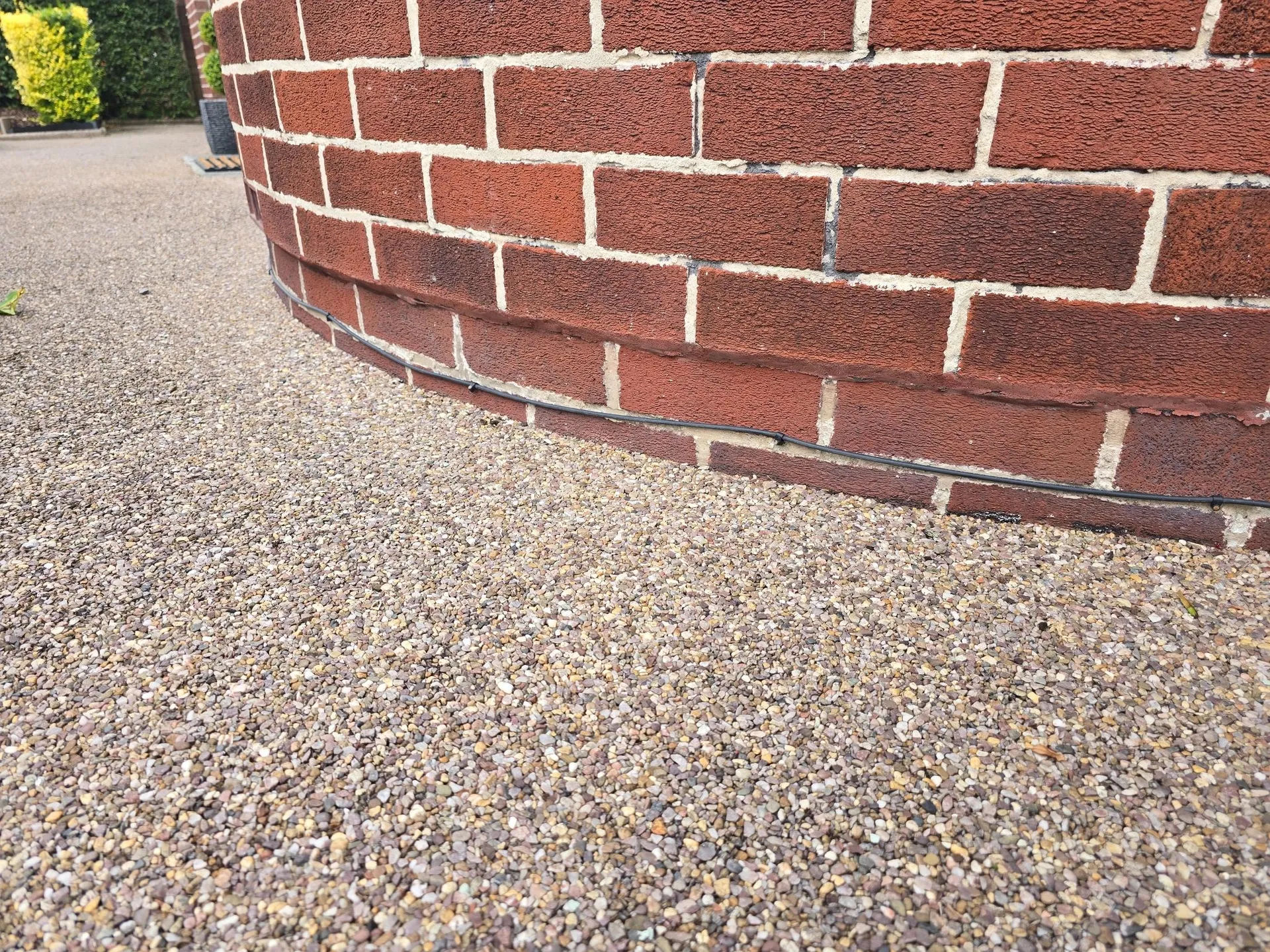
Comparatively elevated moisture-meter readings were recorded internally in areas corresponding broadly with the pronounced external projections and raised ground levels. This relationship suggested that bridging and increased exposure at the base of the wall may have been contributing to the moisture pattern. However, the readings and visual observations did not, individually or collectively, provide conclusive evidence of the precise moisture mechanism.
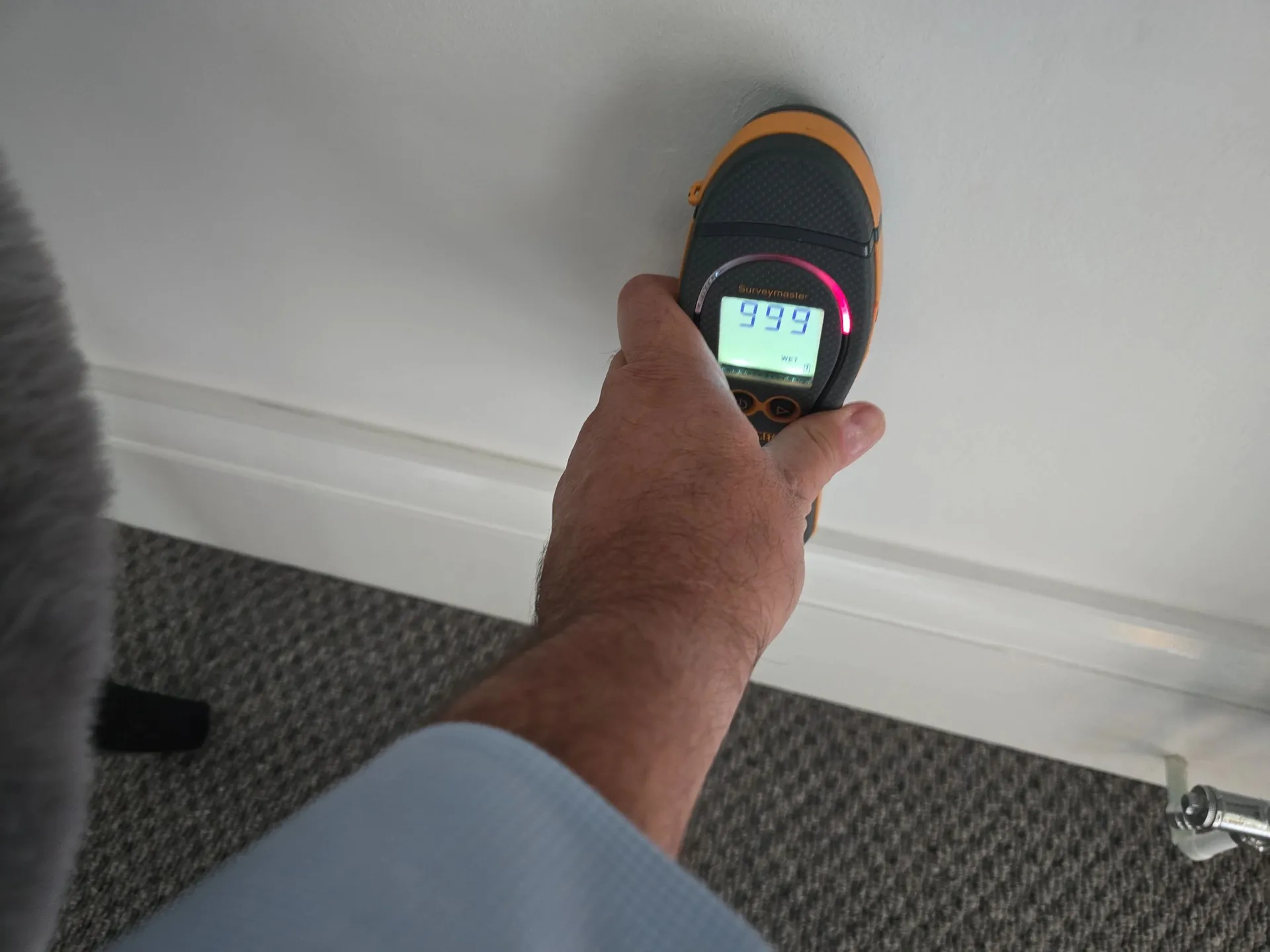
The precise cause of the oversailing could not be confirmed during a non-invasive inspection. No associated cracking or distortion indicated significant structural instability at the time of inspection. The external wall was assigned Condition Rating 3 because the unusual masonry arrangement, raised ground levels and uncertainty over the underlying construction required further investigation before the implications and necessary repairs could be established. The associated internal finishes were assigned Condition Rating 2 because deterioration was present but did not, in isolation, require urgent repair at the time of inspection. The original report recommended:
- Reducing external ground levels where practicable to reinstate suitable clearance below the damp-proof course
- Obtaining details of reported damp-proofing works, including guarantees, invoices and specifications
- Monitoring the affected masonry for further movement or increasing dampness
- If elevated moisture persists after the ground levels have been addressed, obtain further advice from an appropriately qualified and experienced independent building surveyor or damp and timber specialist. The appointed professional should not be financially dependent upon carrying out any subsequently recommended remedial treatment.
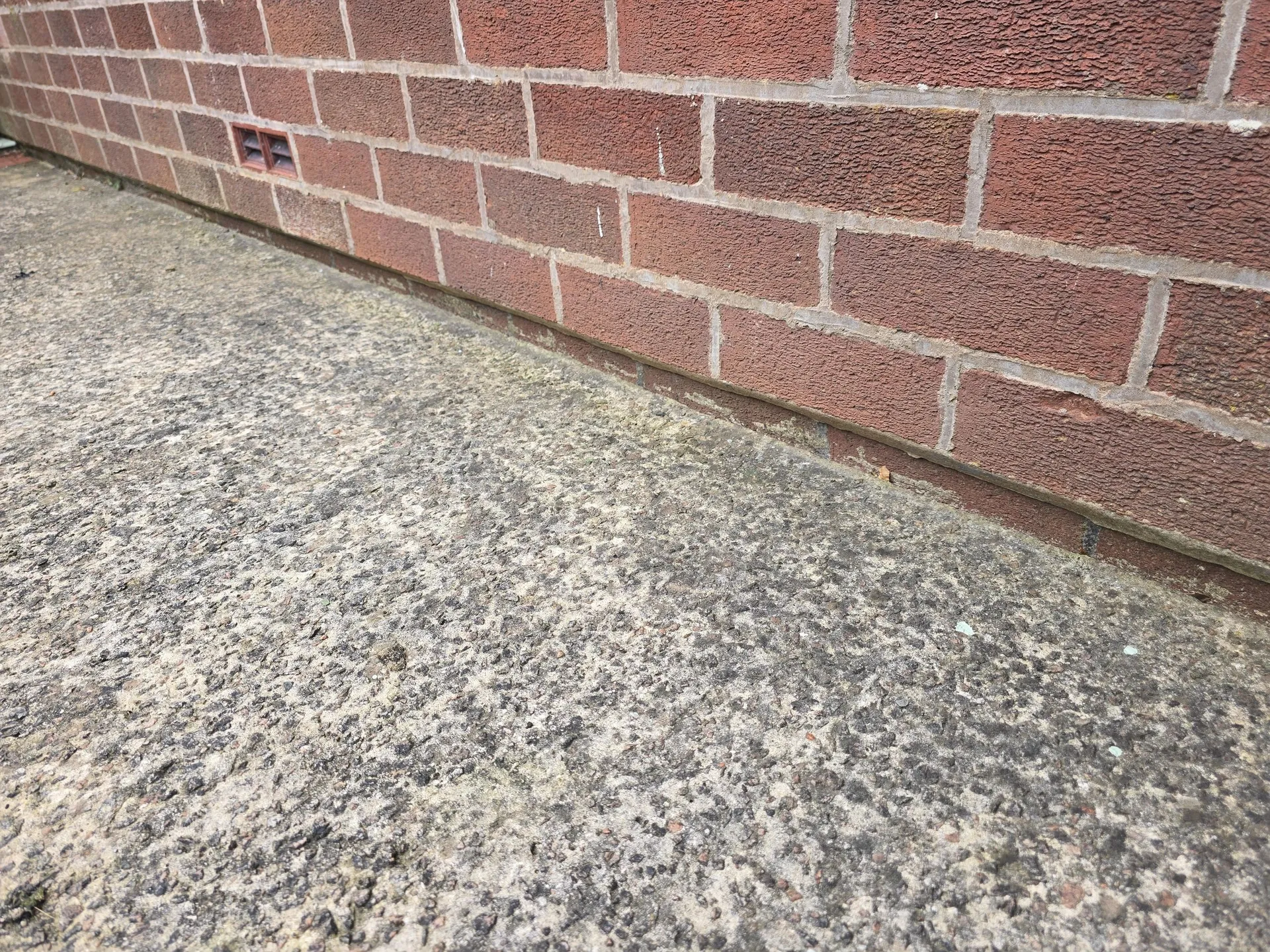
This example demonstrates why damp should be diagnosed from the relationship between internal symptoms and external defects, not from meter readings alone.
What Are the Risks?
Misdiagnosed damp can create several risks for a buyer.
Unnecessary treatment
Chemical injection, tanking or replacement plaster may be recommended when the actual issue is a leaking gutter or bridged damp-proof course. The work may be disruptive and still leave the moisture source unresolved.
Damage to traditional fabric
Inappropriate cementitious materials or waterproof coatings can restrict evaporation from solid walls. In some buildings, this may increase trapped moisture, salt damage or deterioration to brick, stone, mortar and plaster.
Continuing internal damage
If moisture remains active, finishes may deteriorate. Paint may blister, plaster may soften and salts may appear as powdery deposits or staining. Timber built into damp walls may also be at greater risk of decay, although the condition of timber requires separate assessment.
Misjudging the purchase decision
A buyer may assume that a previous treatment removes the problem, only to discover that further external repairs, specialist testing and redecoration are required. Repair costs cannot be responsibly stated as a standard range without knowing the extent, access, specification, location, contractor and what is discovered once work begins. The survey should identify priorities and explain where quotations or further investigation are needed.
What Should a Homeowner or Buyer Do?
Start with the cause rather than the treatment.
Damp investigation checklist
Use this decision aid during a viewing or when reviewing a damp report:
- Is the dampness localised or present as a consistent band?
- Are external ground levels below the damp-proof course?
- Could paving, render, gravel or planting be bridging the wall base?
- Is there oversailing brickwork or a ledge beside the affected area?
- Are gutters, downpipes, valleys and drains working correctly?
- Is the affected wall below a chimney, roof junction or parapet?
- Are air bricks visible and clear?
- Is condensation likely because of poor ventilation or cold surfaces?
- Are moisture readings being treated as comparative indicators rather than a diagnosis?
- Is there supporting evidence beyond the meter readings, such as a consistent moisture profile, visible deterioration, salt analysis or appropriate laboratory testing?
- Are previous damp-proofing invoices, specifications and guarantees available?
- Would the issue affect your offer, renovation plans or ability to proceed?
Do not remove plaster, lower ground levels or commission invasive work without understanding the construction and any heritage implications. Basic maintenance such as clearing gutters may be sensible, but more significant work should follow an appropriate diagnosis.
Carl’s View
Address identifiable external defects first, then allow sufficient time for the building fabric to respond and dry. This can take many months in thick or traditionally constructed walls. If symptoms remain active or the diagnosis is still uncertain, further targeted investigation should follow—not automatically another damp-proofing treatment.
When Should You Seek Professional Advice?
Seek advice from a building surveyor or suitably qualified damp and timber specialist where:
- The cause of dampness is unclear
- A damp-proof course has been recommended solely because of meter readings
- The property is pre-1919, listed or traditionally constructed
- Moisture is near a chimney, roof junction or suspected plumbing leak
- External ground levels cannot be lowered without affecting paths, drainage or access
- Previous treatment has failed
- The dampness is accompanied by timber decay, plaster failure or structural movement
- The findings could materially affect your purchase decision
A Level 3 Building Survey is particularly useful where the property is older, altered, unusual or difficult to interpret. It considers moisture alongside walls, roofs, floors, drainage, ventilation, previous alterations and the wider condition of the building. A survey should ideally be arranged once your offer has been accepted and early enough in the conveyancing process for its findings to be investigated, costed and considered before you become legally committed to the purchase. Use the findings to decide whether to proceed, renegotiate, investigate further or walk away. The correct outcome depends on whether the defect is understood, manageable and reflected in your expectations and the agreed price. At Mason & Oak, our approach is Thorough. Honest. Independent. Request a survey quote or find out more about our residential surveying services.
Frequently Asked Questions
Can a moisture meter prove rising damp?
No. A moisture meter can identify and compare areas of potentially elevated moisture or conductivity. Readings can be affected by salts, plaster, metal fixings and other materials. The cause must be assessed alongside the building’s construction, visual symptoms and external defects.
Is rising damp commonly misdiagnosed?
It can be. Similar symptoms may result from high ground levels, defective rainwater goods, oversailing brickwork, roof or chimney defects, plumbing leaks, condensation and impermeable finishes. Rising damp should not be assumed without sufficient supporting evidence.
Should I accept a previous damp-proofing guarantee?
Treat it as supporting documentation, not proof that the current problem has been resolved. Ask for the original survey, specification, invoice and guarantee. The treatment may not relate to the actual source of moisture affecting the building now.
What will a Level 3 Building Survey tell me about damp?
A Level 3 Building Survey will help you understand significant repair liabilities, their relative priority and where contractor quotations or further investigation should be obtained. Actual repair costs can vary considerably depending on the extent of the work, specification, access, location and what is discovered once work begins.
When should I arrange a survey?
A survey should ideally be arranged once your offer has been accepted and early enough in the conveyancing process for its findings to be investigated, costed and considered before you become legally committed to the purchase.
Will lowering external ground levels always solve the problem?
Not necessarily. It may address bridging or reduce moisture exposure, but the wall construction, drainage, rainwater disposal, finishes and any other moisture sources must also be considered. Further investigation may be needed if dampness persists.
Do older homes need different damp treatments?
They may. Solid-wall and historic buildings often require repairs and materials that are compatible with their traditional construction. This may include vapour-permeable lime-based mortars, plasters or finishes where appropriate, although these should not be specified automatically without first understanding the wall construction and source of moisture. A building surveyor with experience of older homes can help distinguish necessary repairs from treatments that may be inappropriate or unnecessary.