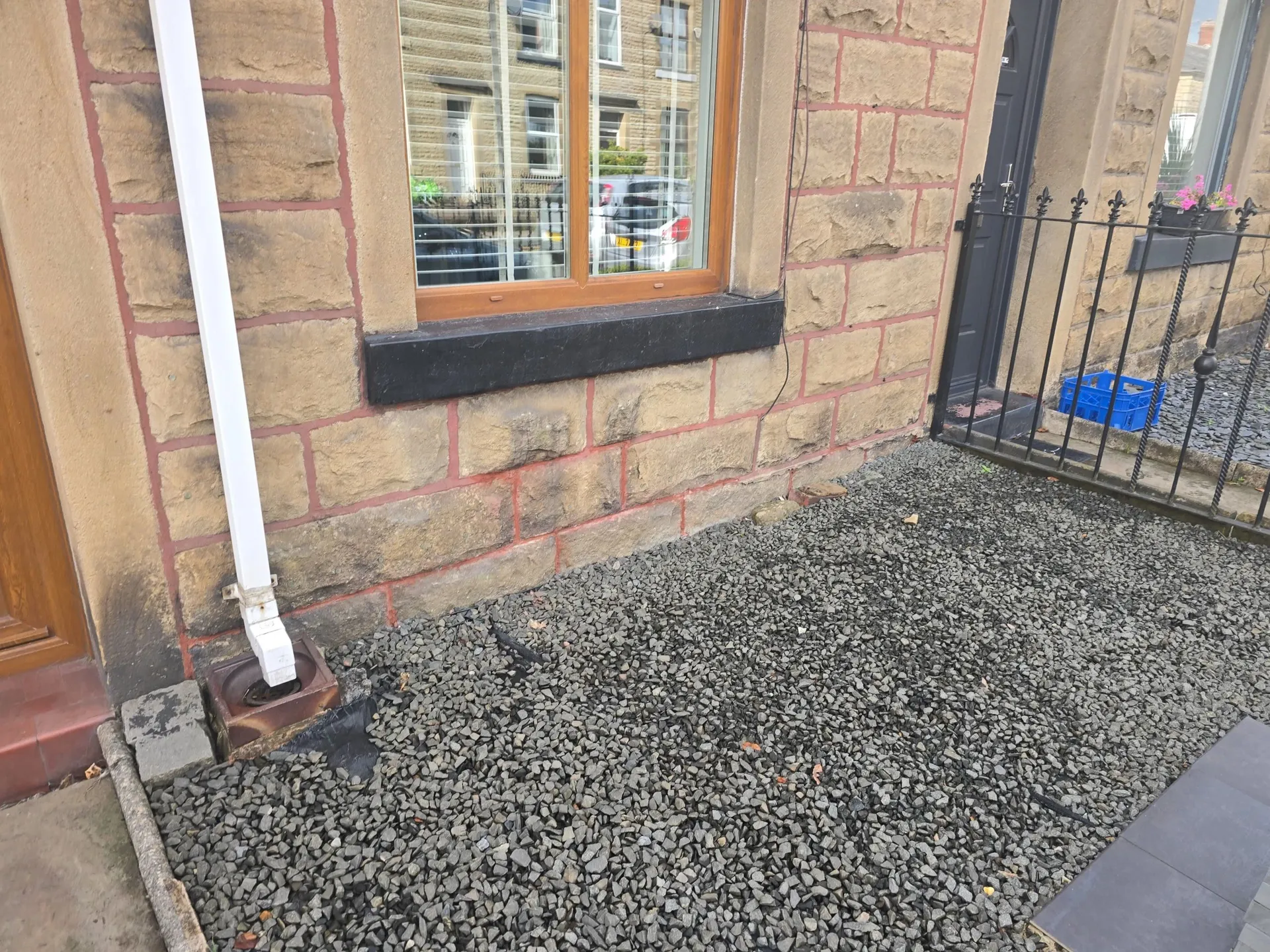
By Mason & Oak Surveyors and Heritage Consultancy In many traditional masonry walls, relatively soft lime mortar acts as a sacrificial material: permeable enough to let rain evaporate away again, and soft enough to absorb small movements — and when a joint eventually failed, it was raked out and renewed, not the stone behind it. Cement-rich pointing changes that relationship. Where dense, hard mortar is applied to softer sandstone or handmade brick, the joint stops being the weakest link. Moisture that would previously have escaped through the joint may now pass through the masonry itself, and weathering that the mortar would once have taken becomes concentrated on the stone faces. Over years and decades, that is how hard joints end up surrounded by eroding stone. That does not mean hard pointing is automatically defective, or that every cement-containing mortar is a problem — plenty of walls carry cement repointing for decades without significant harm. But on softer traditional masonry, and particularly where the joints are raised or heavily strapped across the stone face, it is worth looking at more closely. The question is not whether cement pointing is present, but whether the pointing is compatible with this particular wall and whether there is evidence that it is contributing to damage.
Why incompatible mortar matters
A traditional solid wall works as a system: the masonry, the mortar, the roof, the rainwater goods, the ground levels and the finishes all affect how moisture behaves. When one element is changed — and repointing is one of the most common changes — the wall may respond in ways that are not immediately obvious. 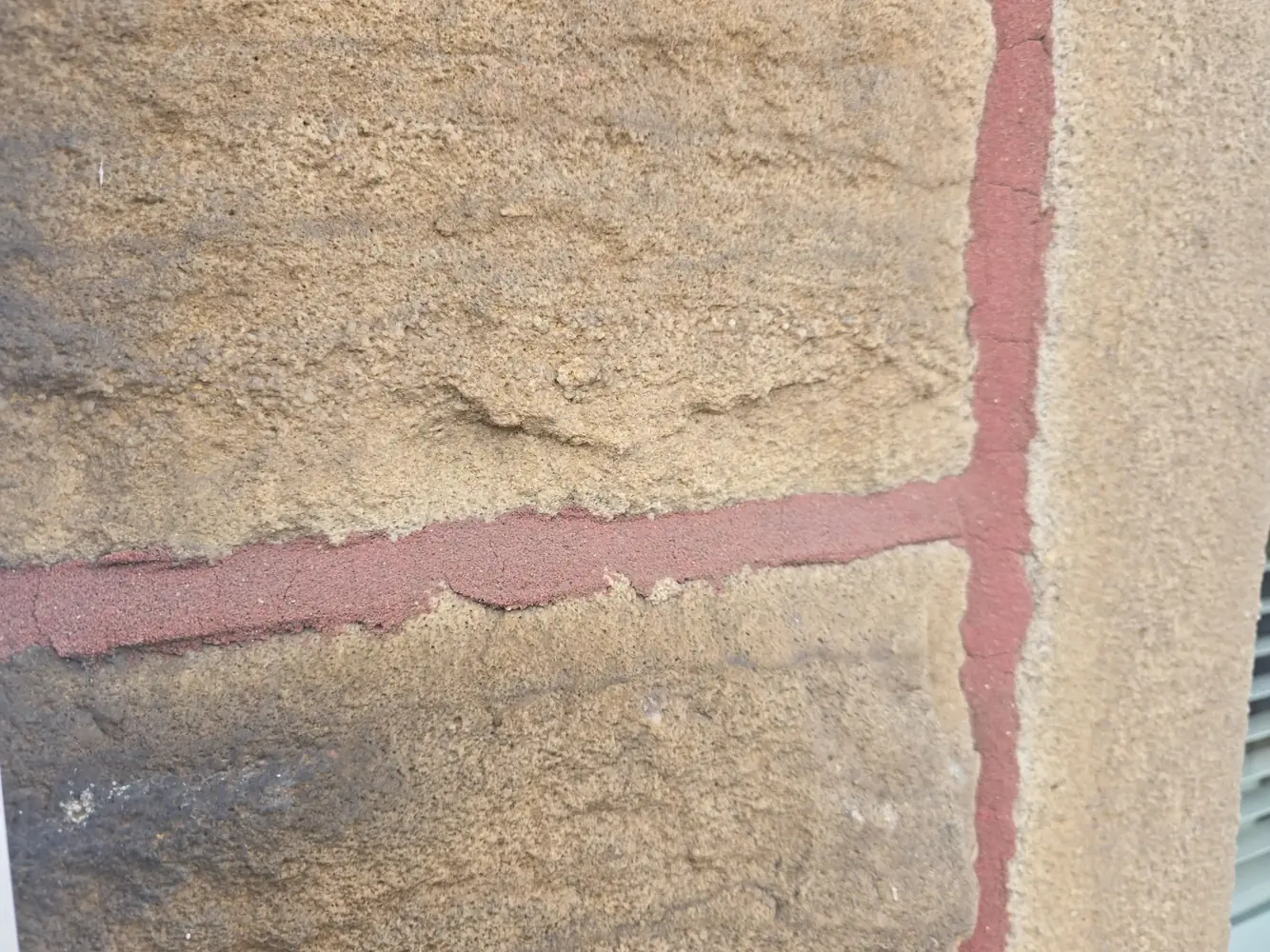
Three mechanisms are worth understanding. Drying. Lime mortar is permeable and lets moisture evaporate from the wall surface. Dense cement joints are far less permeable, so drying through the joints may be reduced, leaving the surrounding masonry wetter for longer. In a wall exposed to wind-driven rain, that altered balance can show up as damp patches, salt deposits or slower drying at internal surfaces. Minor movement. Old buildings move: thermal changes, seasonal moisture, slight settlement over centuries. Lime joints accommodate that movement quietly. Hard, rigid mortar is less able to accommodate movement, so it may crack under the same conditions — and a cracked joint admits water, which is exactly what pointing exists to keep out. Rigid joints can also transfer stresses into the surrounding masonry, potentially causing damage where the stone or brick is weaker. Weathering. Where the mortar is harder or denser than the stone, incompatible mortar can concentrate moisture-related deterioration in the surrounding masonry rather than in the joint. Softer sandstones and handmade bricks are the most vulnerable. The result is a wall where the mortar looks crisp and the stone looks tired — the opposite of what a well-maintained traditional building should look like. None of this means the wall is failing. It means the wall is working under different rules than it was designed for, and it is worth understanding the condition before deciding what, if anything, to do.
What to look for when viewing an older property
Raised joint profiles and a dense grey appearance can suggest later repointing, although appearance alone does not reliably establish the mortar's composition or hardness. More useful are the combinations that suggest the pointing is affecting the wall:
- Eroding stone beside intact joints — chipped, flaking or recessed stone or brick faces where the mortar between them remains hard and proud. This mismatch is the classic sign of a strength difference, although frost, salts and past cleaning can also erode masonry, so the wider pattern matters.
- Cracked or detached pointing — particularly where cement has been applied over the top of older mortar rather than raking back to sound material. Water enters through the openings even where the joint looks substantial.
- Raised or “strap” pointing — mortar spread across the face of the masonry rather than finished within the joint. It is visually intrusive, makes future maintenance harder, and where firmly bonded, its removal can itself damage the stone.
- Localised dampness or salt deposits — staining, damaged plaster or salt crystallisation at low level internally. On a solid wall these can relate to the pointing, but they can equally come from gutters, downpipes, high ground levels, blocked subfloor ventilation, plumbing leaks or condensation — a chimney with open joints and failed flashing, for instance, can be the real route for rainwater.
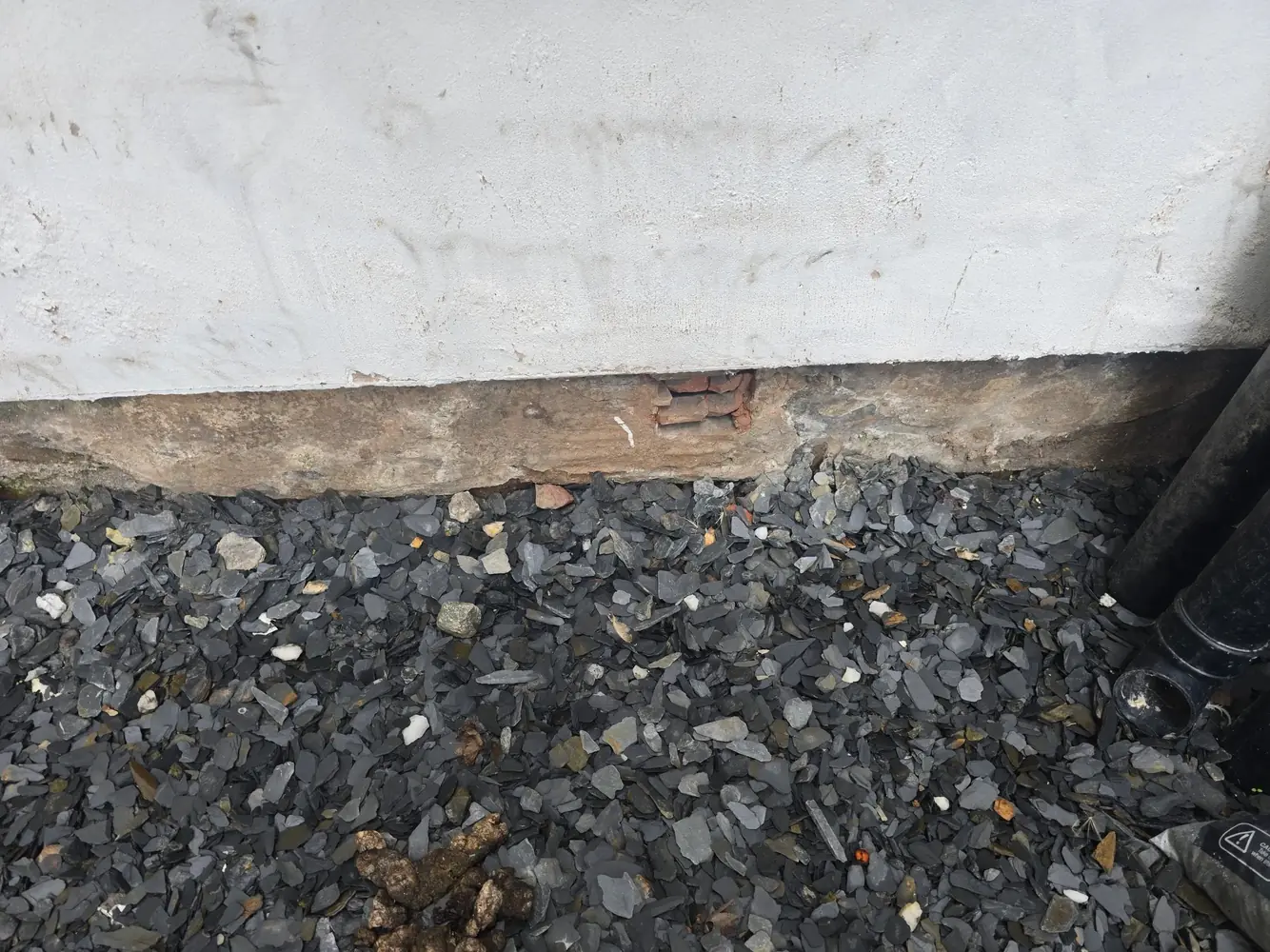
The aim is not to diagnose from a single feature. It is to notice the pattern: hard joints, eroding edges, cracking, and where the moisture evidence appears inside relative to outside.
Should cement pointing be removed?
Not automatically — and this is where well-meaning owners and buyers most often get it wrong. Sound, well-adhered cement pointing should not be stripped out simply because it is cement. Removal is slow, expensive and, where the mortar is strongly bonded, genuinely capable of damaging the masonry: pieces of stone edge can come away with the joint, leaving the wall worse than before. On a listed building, that work may also need consent. If the wall is weathering evenly and there is no moisture evidence, leaving sound pointing alone and monitoring it is often the sensible course. Where repairs are justified — failed joints, active erosion, moisture evidence consistent with the pointing — the priority is assessment by someone experienced in traditional masonry, followed by a suitable contractor and a mortar specification matched to the wall — usually lime-based, but specified rather than assumed. That assessment should establish the wall's construction and condition, the exposure it faces and the repair approach. Workmanship matters as much as material, and the difference between careful and careless repointing shows up in the wall for decades. For uncertain cases, a small trial removal or sample panel is often the best first step. It shows how the existing joint responds to careful raking out, allows the proposed mortar mix to be tested against the actual stone, and gives a realistic indication of cost and programme before committing to a whole elevation.
When to seek advice
A closer look is sensible where the property is pre-1919, listed or built of soft sandstone or handmade brick; where stone or brick faces are visibly flaking or eroding alongside hard joints; where pointing is cracked, raised or detached across significant areas; or where internal dampness appears near external wall defects. A Level 3 Building Survey considers walls, roofs, moisture, floors, drainage, ventilation and alterations together, which is usually the proportionate route for an older or altered property. Our older-house viewing guide is a useful starting point, and Is It Really Rising Damp? explains why moisture symptoms should never be diagnosed from meter readings alone. A visual survey identifies condition, significance and where further investigation is warranted; it cannot confirm what is concealed within the wall. Where the evidence is inconclusive, the honest recommendation is often monitoring or a specialist assessment rather than immediate action.
Carl's View
Hard pointing is a reason to look more closely, not a reason to reach an automatic conclusion. The useful assessment is whether the mortar, the masonry, the moisture evidence and the repair history make sense together.
Frequently Asked Questions
Is cement pointing always wrong on an older building?
No. Plenty of traditional walls carry cement repointing without significant harm. Where the masonry is soft and the joints are dense and raised, the mismatch is worth assessing, but presence alone is not evidence of damage.
Should I have cement pointing removed?
Not automatically. Where it is sound and well adhered, removal can damage the masonry and may need consent on a listed building. Assessment by someone experienced in traditional masonry comes first; a trial removal or sample panel is often the sensible starting point.
Can you tell from a photograph whether pointing is causing damp?
No. A photograph can show the pattern worth investigating, but the mechanism, extent and repair specification need proper assessment of the building.
What survey suits a traditional stone or brick property?
A Level 3 Building Survey is usually the proportionate choice for an older, altered or unusual property, considering walls, roofs, moisture, drainage and ventilation together.
Contact Mason & Oak
If you are buying or own an older, traditional or listed property in Lancashire or the wider North West, we are glad to discuss which level of survey suits the building — from Level 2 Home Surveys for conventional properties to detailed Level 3 Building Surveys for solid-wall, altered and heritage buildings. Mason & Oak is an independent practice with particular experience of traditional construction, and we will always discuss the property with you first. Get in touch through masonandoak.co.uk to arrange a conversation.
Further reading
- Historic England: Repointing Brick and Stone Walls
- Department for Communities: Technical note on repointing stone and brick
- Society for the Protection of Ancient Buildings: advice on repointing and inappropriate cement pointing
- The Building Conservation Directory: repointing articles
By Mason & Oak Surveyors and Heritage Consultancy